Cash Clarity: A Financial Clarity System for Small Businesses
When a business sees its total balance, is it seeing reality or an illusion of liquidity?
Overview
Small business owners make critical financial decisions daily across payroll, inventory, and vendor payments, all while staring at a bank balance that doesn't reflect what's already spoken for. Cash Clarity is a decision-support system that transforms that static number into a commitment-aware view, closing the gap between what owners see and what they can actually spend.
Problem:
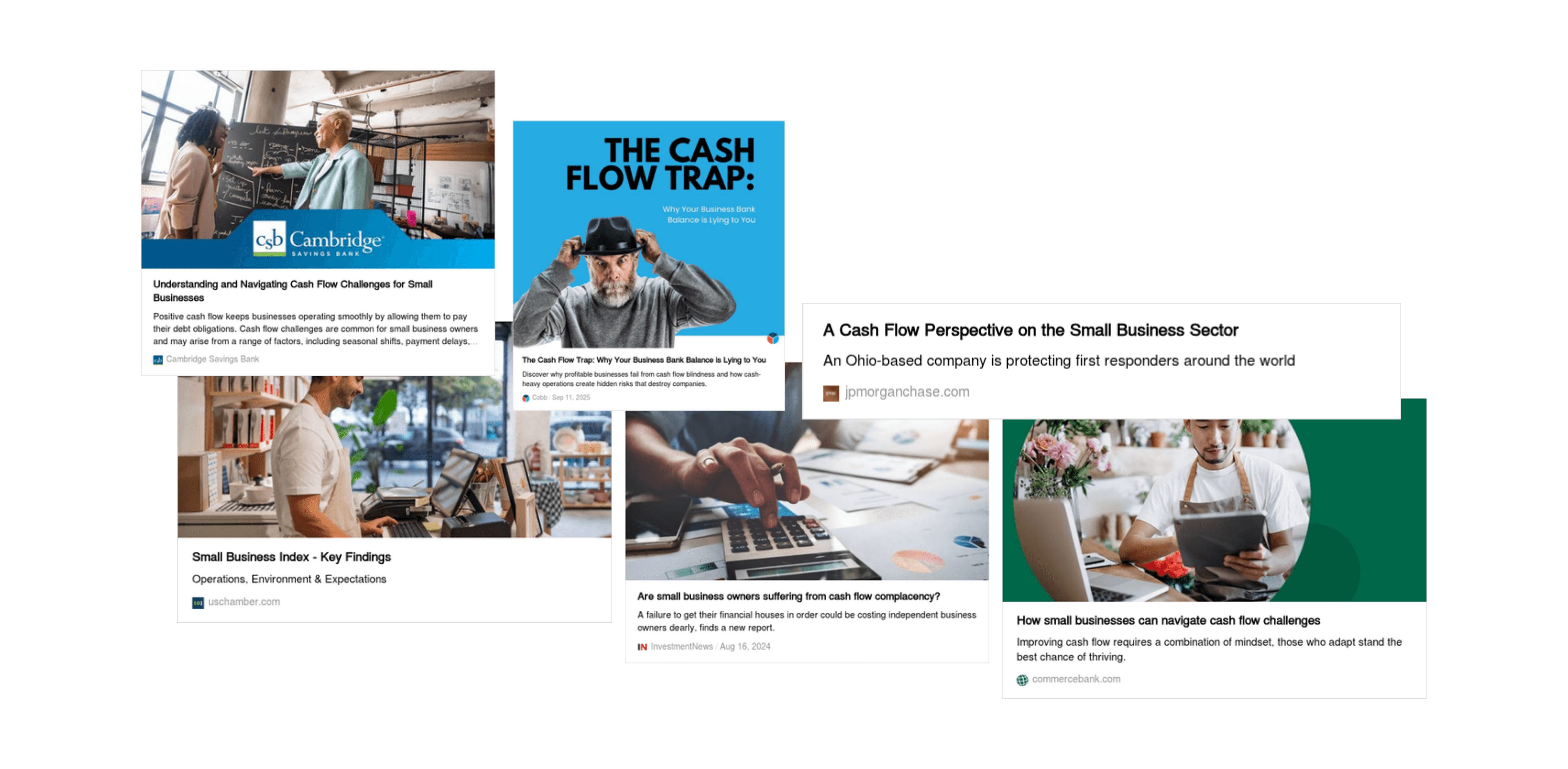
Bank balances are visible. Obligations are not. Small business owners routinely make spending decisions based on total balance figures that don't account for committed expenses, pending invoices, or recurring obligations. The result is a false sense of liquidity and decisions made on incomplete information. The real problem wasn't a lack of data. It was a lack of structure around what that data actually meant.
Process
I interviewed small business owners to understand how they make day-to-day spending decisions and mapped their decision journeys to identify moments of hesitation and uncertainty. This process revealed that the real gap was not missing data, but missing clarity around committed funds, which guided the development of a structured Safe-to-Spend decision layer.
User Interview:
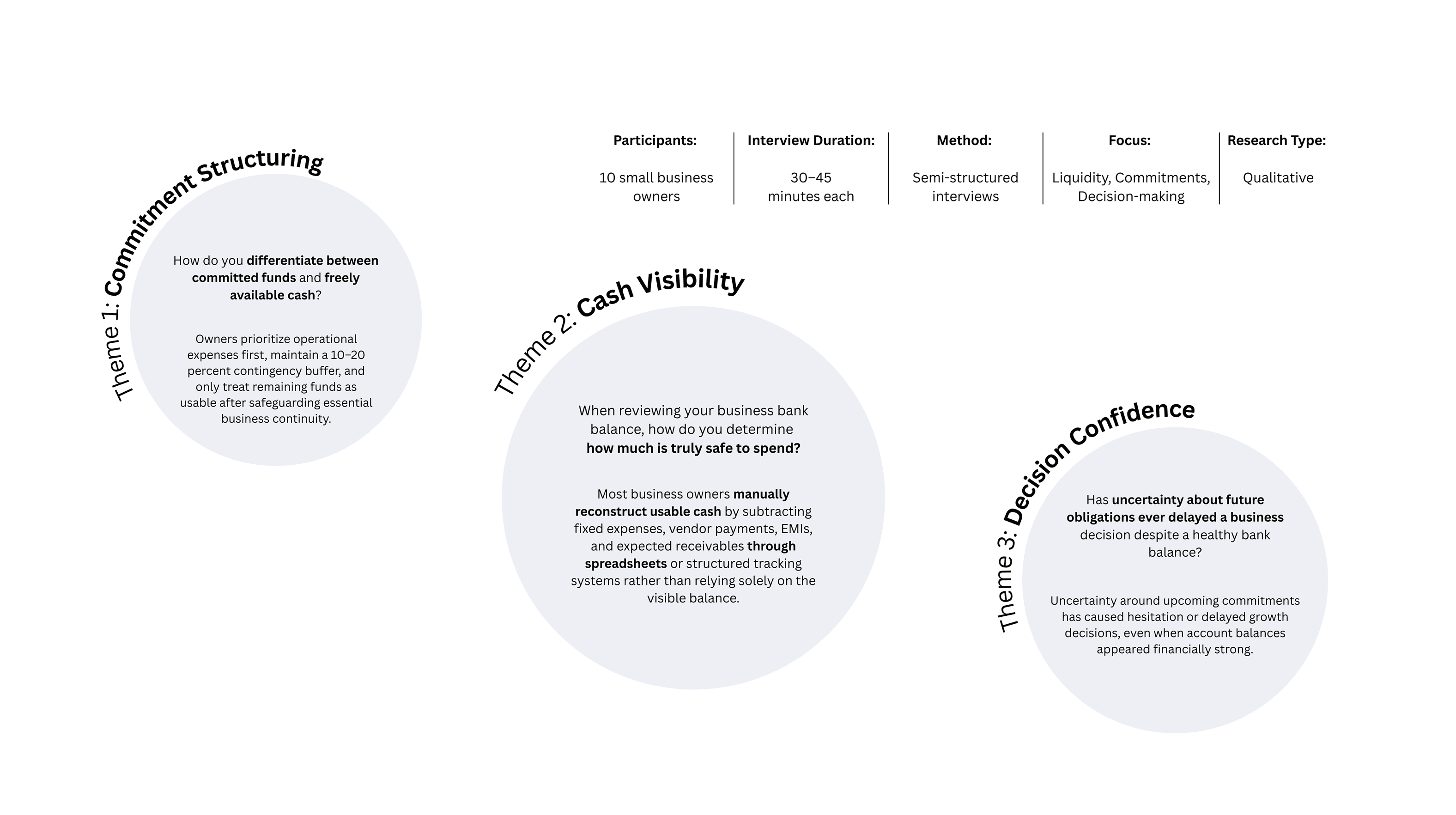
I conducted interviews with 10 small business owners across FMCG, apparel, manufacturing, and jewelry, focusing on how they make day-to-day spending decisions. I asked them to walk me through their last three financial decisions, what they looked at, what made them hesitate, and what they wished they had known. A recurring pattern emerged: owners were pausing not because their balance was low, but because they weren't sure how much of it was already spoken for.
"I see $14,000 in my account but I know rent and payroll are coming. I just don't know exactly what's left." - Interview participant
Decision Threshold Mapping:
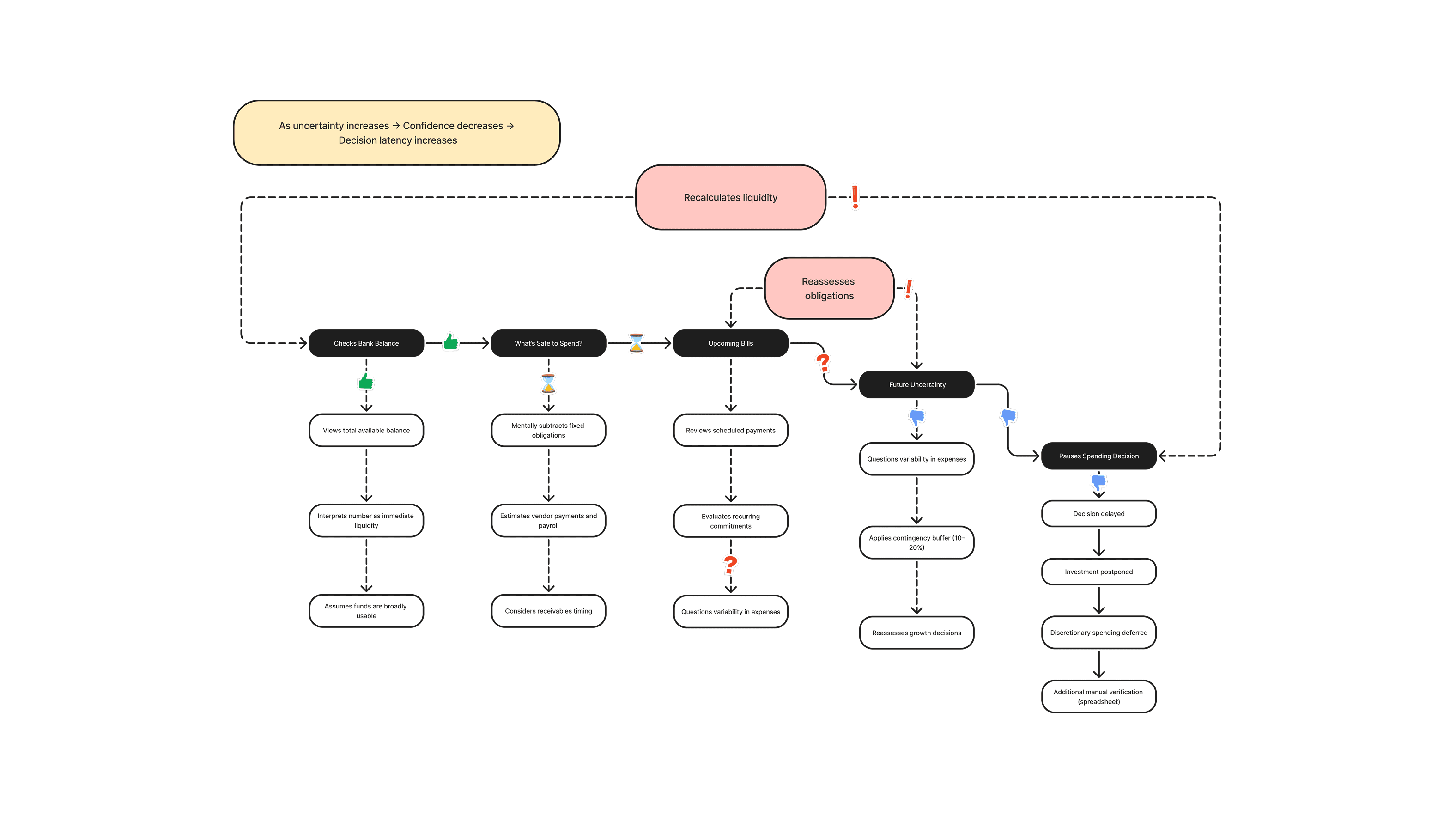
To make the hesitation pattern visible, I mapped the moments where owners paused or second-guessed a spending decision despite having a healthy balance. I clustered obligations by certainty and operational impact, separating what was confirmed from what was anticipated, and what was critical from what was discretionary. The map revealed that uncertainty didn't spread evenly across the month. It concentrated at specific points: payroll windows, vendor payment cycles, and tax periods. These became the design targets.
Key Insights.
Visibility Does Not Equal Usability
Business owners can see their total bank balance, but that number does not clearly distinguish between committed and usable funds, forcing them to manually reconstruct true liquidity. → This informed the need for a clearly defined Safe-to-Spend anchor.
Owners Already Think in Risk Tiers
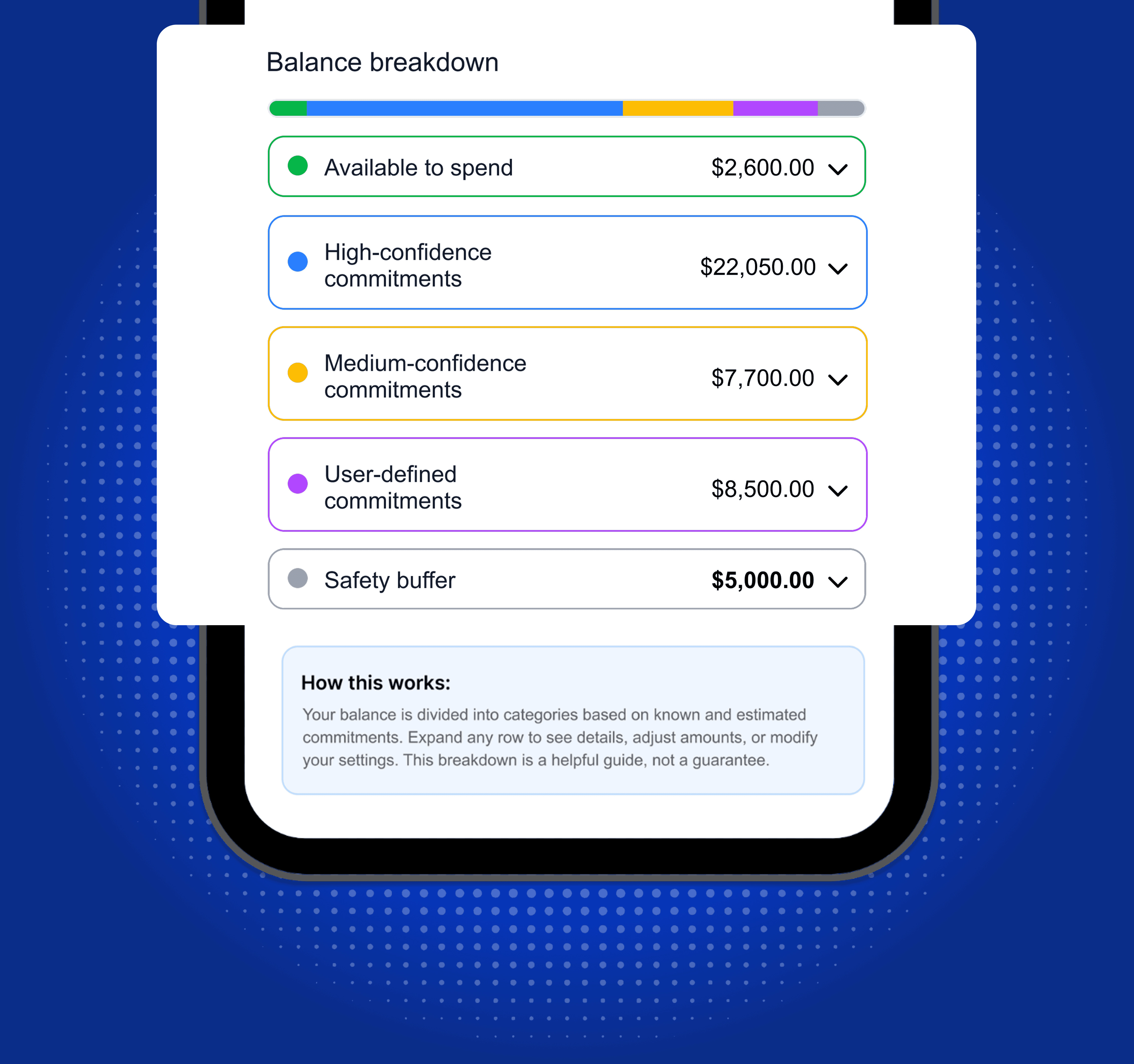
Participants consistently prioritized fixed operational expenses, applied contingency buffers, and mentally categorized commitments by certainty level before spending. → This led to designing a tiered commitment structure (High, Medium, User-defined) within the dashboard.
Hesitation Is Driven by Uncertainty, Not Lack of Funds
Even when balances appeared strong, ambiguity around upcoming expenses and variable obligations delayed growth decisions. → This validated the need for a commitment-aware clarity layer that reduces ambiguity without forecasting.
Opportunity.
How might we help small business owners understand how much of their bank balance is truly usable before making financial decisions that impact stability or growth?
Solution:
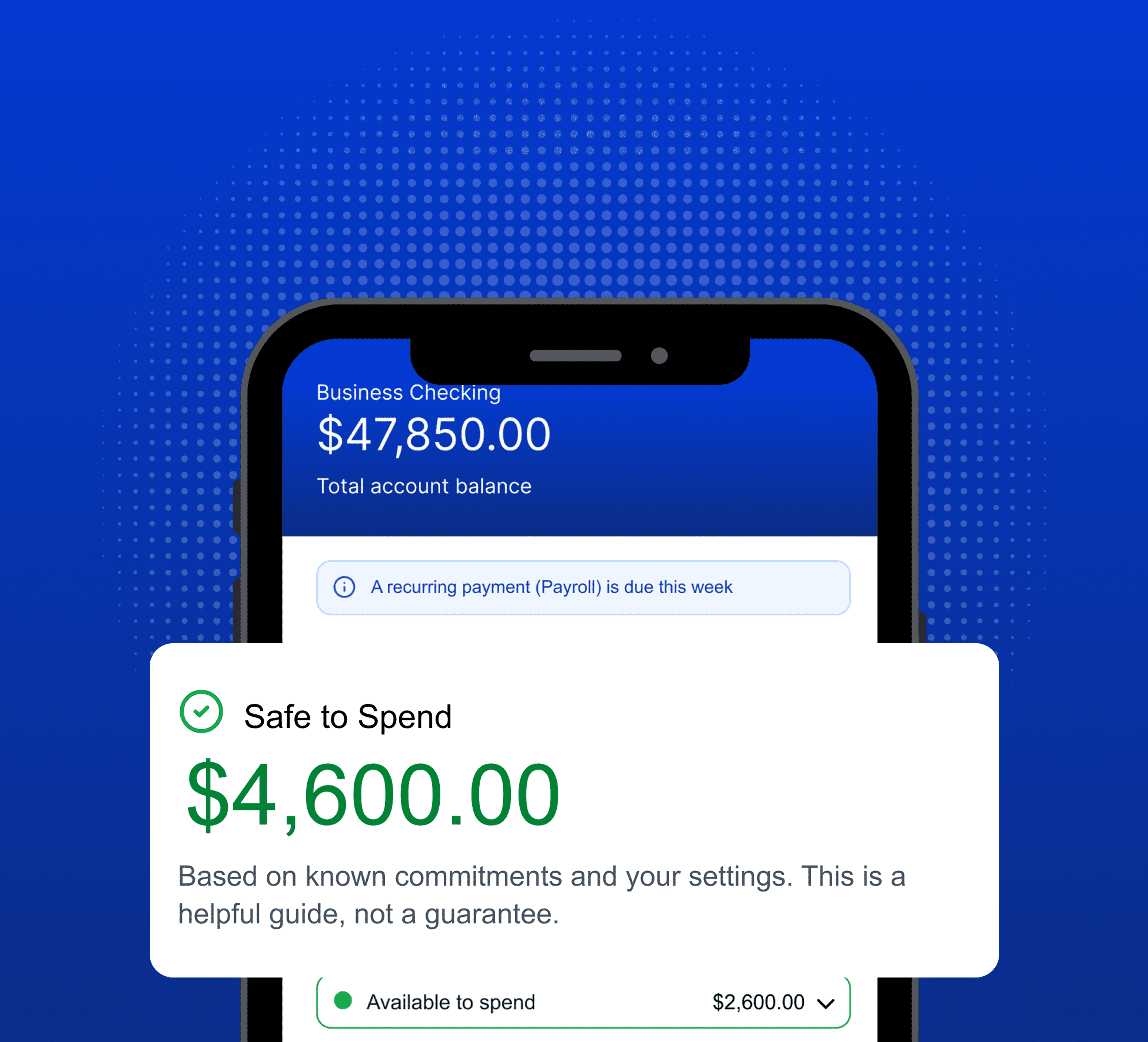
A Safe-to-Spend decision layer built on top of existing account data. Rather than showing a single balance figure, Cash Clarity restructures financial data into three commitment-aware tiers:
Committed — funds already allocated to confirmed obligations
Anticipated — recurring or expected expenses within the next 30 days
Safe-to-Spend — what remains after both, with a protected buffer
The goal was not to add complexity but to remove the mental work owners were already doing manually — and make it visible, reliable, and fast to read.

Impact
Cash Clarity transforms static bank balances into commitment-aware insight, reducing cognitive load and increasing day-to-day financial confidence for small business owners. By making obligations visible and surfacing a clear Safe-to-Spend anchor, it enables faster, lower-risk decisions without adding complexity.

result.
In follow-up discussions with small business owners, the Safe-to-Spend concept was perceived as highly valuable, with participants noting it would increase clarity and confidence in daily financial decisions. Although not yet live, the feature was seen as a meaningful improvement over balance-only dashboards, reducing reliance on manual spreadsheets and mental buffers.

