Little Word Builder: A Game to Help Kids Explore Vocabulary.
How can we create an educational card game that helps children aged 3–5 build vocabulary through play without relying on reading skills?
about.
Little Word Builder is an educational flashcard game designed for children aged 3–5 to explore vocabulary through emoji-based visual cues. With 5 fun categories, it encourages word recognition, imagination, and cognitive association. The game blends play and learning in a simple, intuitive format that even pre-readers can enjoy, making it ideal for both at-home and classroom engagement.
Problem:
Early learners often struggle with traditional vocabulary tools that rely heavily on text and adult guidance. There is a need for a simple, intuitive learning format that allows pre-readers to explore language independently through visual and tactile interaction.
Process:
I began by defining the developmental milestones and learning goals relevant to children aged 3–5. Through iterative sketching, prototyping, and playtesting, I refined the game mechanics to ensure the experience was intuitive and required minimal adult assistance.
Secondary Research
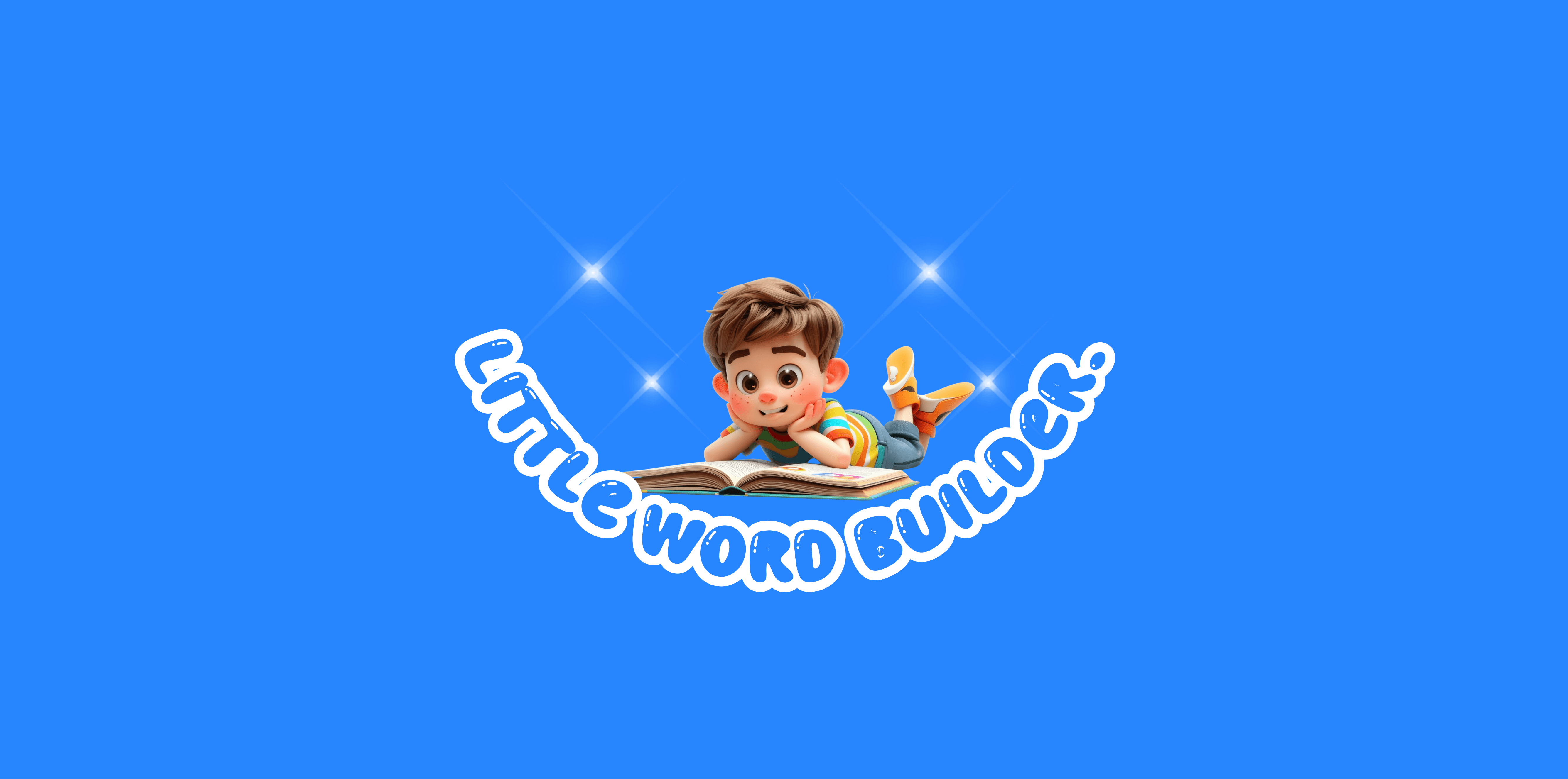
I conducted secondary research on early childhood development, learning styles, and cognitive growth patterns in preschoolers. Insights from educational psychology and toy industry benchmarks informed the structure, category logic, and visual clarity of the final game.
Journey Mapping
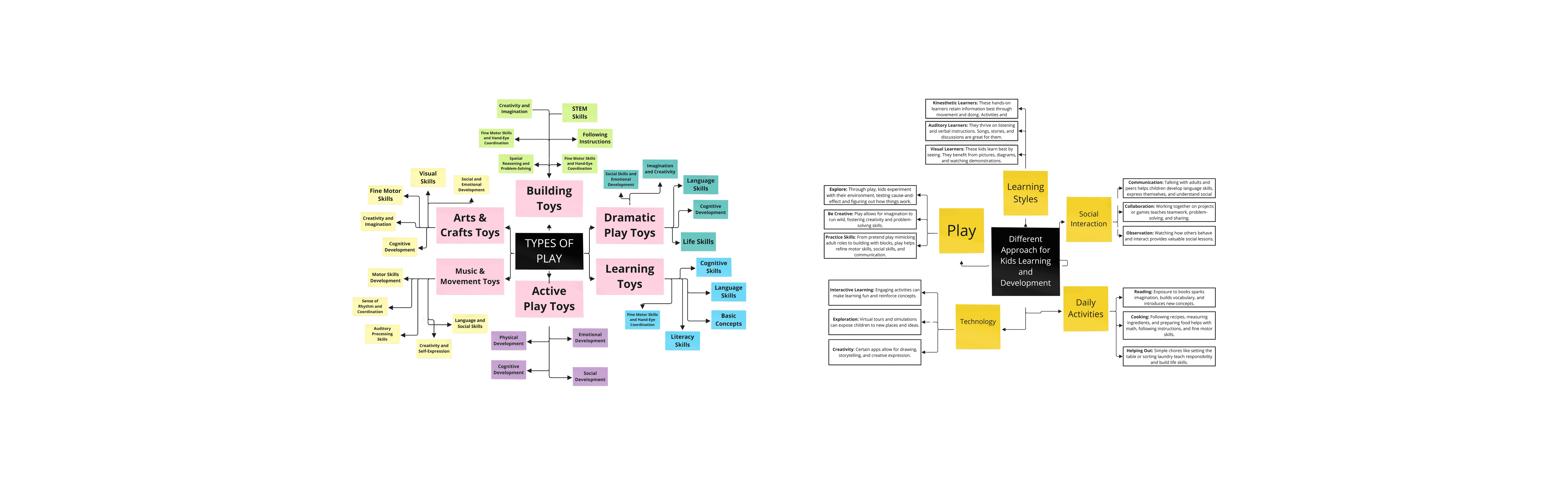
I mapped the parent’s decision journey from recognizing the need for educational play to post-purchase reflection. This helped me identify moments of overwhelm and doubt, guiding clearer communication and stronger trust cues in the product design.
Key Insights.
Opportunity
How might we design a physical card game for pre-readers that communicates meaning instantly through intuitive visuals and allows children aged 3–5 to engage independently?
Solution:
I designed Little Word Builder as a visually intuitive, emoji-based learning system where every icon, color, and category was carefully structured for immediate comprehension. Through usability testing and iterative prototyping, the game was refined to match preschool attention spans while providing clear, tactile feedback that supports confident, independent play.
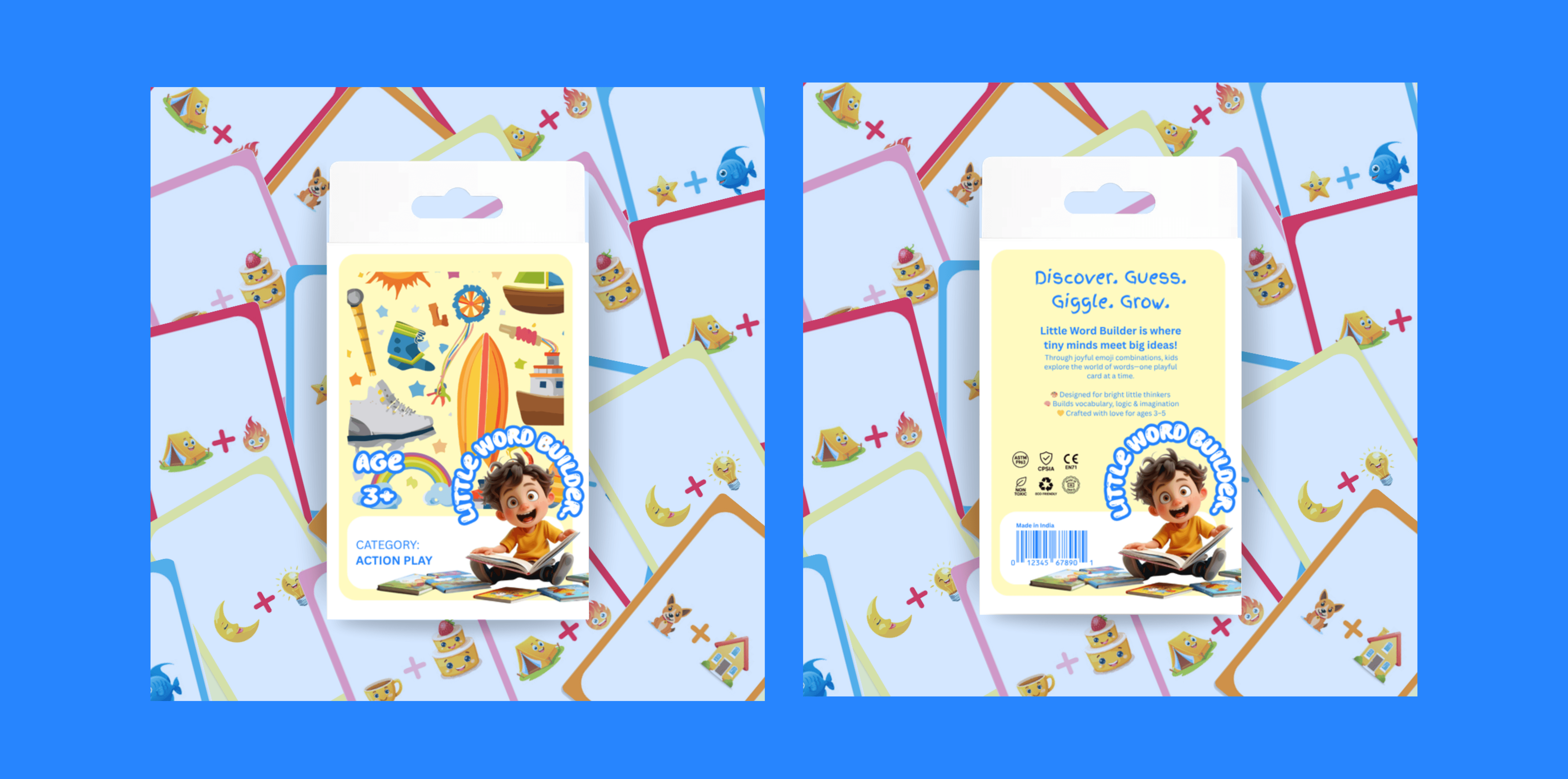


Impact
This play-based approach strengthens vocabulary, cognitive association, and early reading readiness through visual learning. It builds confidence and problem-solving skills while making language discovery joyful and engaging for preschoolers.
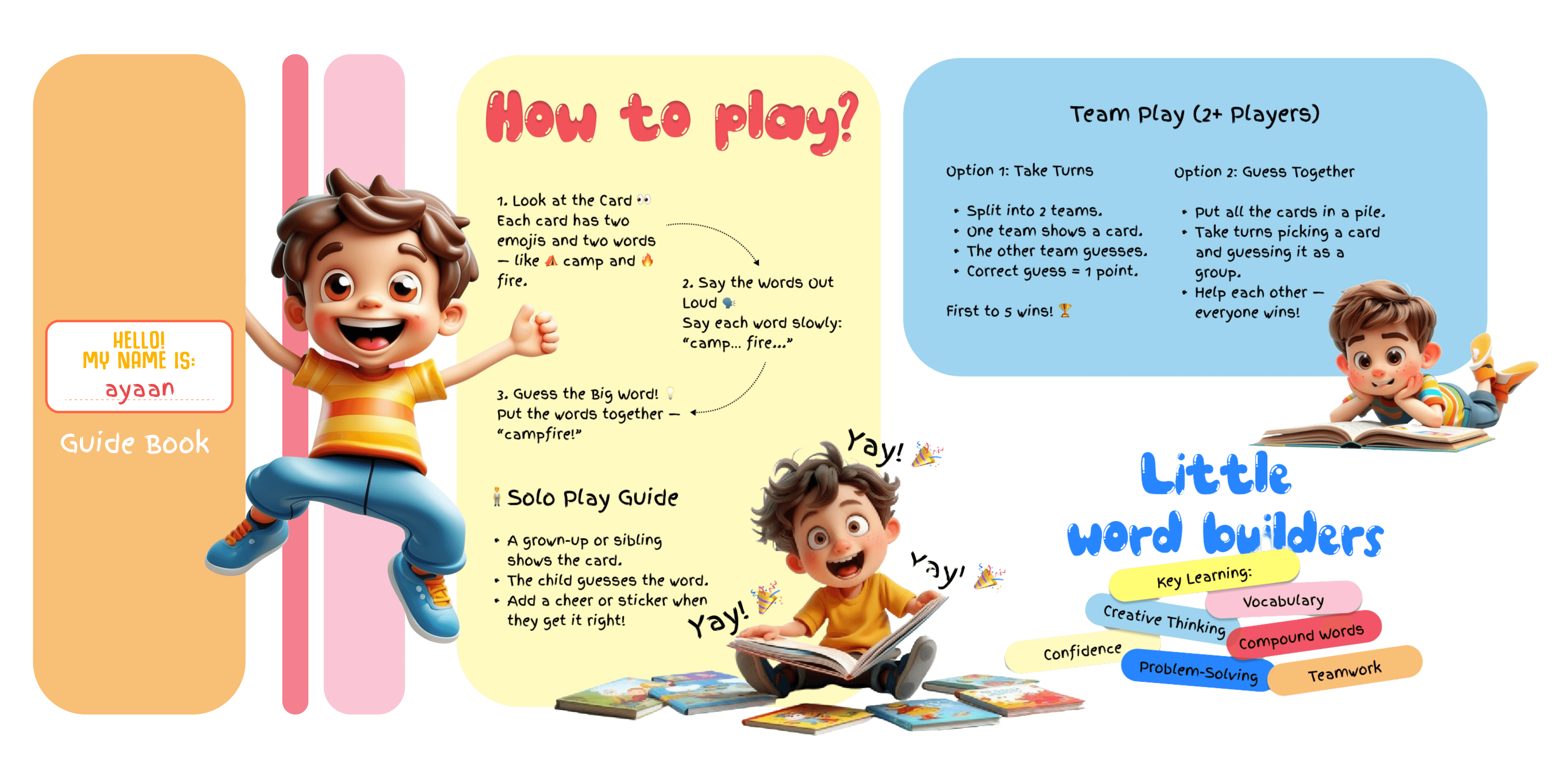
result.
The final product was successfully playtested with real users and validated for age-fit, engagement, and parent appeal. I learned how deeply design must respond to developmental stages. From packaging to UX, every detail shaped comprehension and joy.
The process refined my ability to test, simplify, and co-create with users—especially when the users are little humans still learning the world.